
When you buy ground-stacked speakers, the worst case is a bad night. When you fly them, the worst case is a dropped box on people. The acoustic specification sheet is still the same document, so a lot of buyers read the rigging page with the same casual eye they use for frequency response. That is the mistake.
Rigging is a load path. Every element in it — the bumper, the fly bar, the array link, the shackle, the motor, the beam above — carries the weight of everything hanging below it, multiplied by a safety factor. If any single link is under-rated or fake, the whole chain fails at a point nobody tested. So let us walk the chain.
Understand safe working load before you read a single number
Rigging hardware never quotes its breaking point as the usable number. It quotes a safe working load (SWL), also called working load limit (WLL). That figure already includes a safety factor, typically 5:1 for lifting hardware — a shackle that breaks at 5 tonnes is only rated to lift 1 tonne.
The single most common error in a spec sheet from a cheap supplier is quoting the breaking load and letting the buyer assume it is the working load. A "2 tonne" bracket that really means "breaks at 2 tonnes" has a working limit around 400 kg. Fly four boxes of 60 kg with it and you are already past the numbers, before anyone adds the safety factor you thought was included.
Every load-bearing part in the system should state its SWL, and it should be marked on the physical part, not just in the catalogue. If a supplier cannot show you a stamped or engraved rating, assume there is no rating.
| Component | Number that matters | What to check |
|---|---|---|
| Shackle / bow shackle | SWL or WLL | Marked on the body, not just on a tag |
| Fly bar / bumper | SWL per pickup point | Rated for the full array, geometry matches the box |
| Array link / quick-release | SWL, and pin rating | Correct pin diameter, positive locking, not a friction fit |
| Hoist / chain motor | Rated capacity, and its own certification | Load cell or limiter, chain grade, brake test |
| Steel wire rope / spanset | SWL, and angle derating | Inspection date, no kinks, correct sling angle |
Angles matter more than most buyers expect. Take a two-leg sling at 90 degrees apart and it pulls at a fraction of the vertical force; spread the legs to 120 degrees and the load on each leg increases well beyond the total weight. A sling rated 2 tonnes vertically can be overloaded on a wide angle with only 1.4 tonnes hanging on it. Riggers use an angle factor table for exactly this reason. If your supplier does not know what that is, you have found your problem.
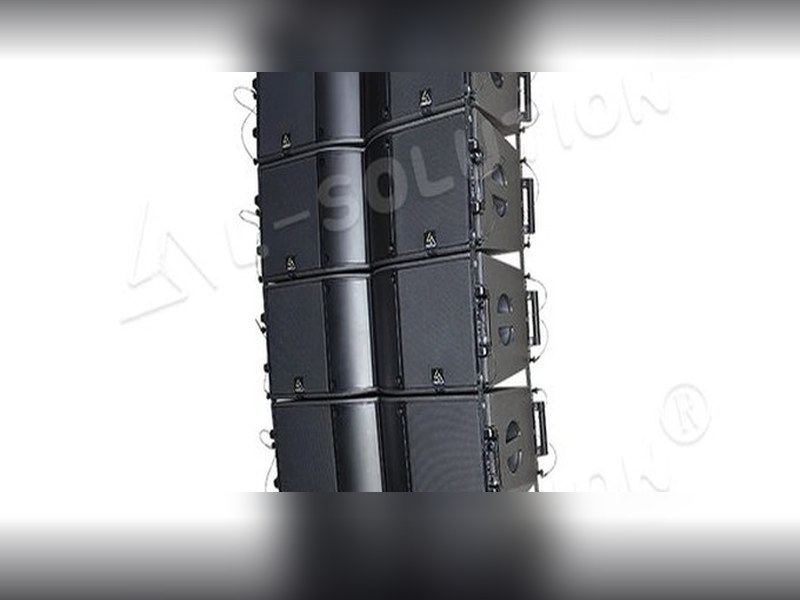
Certifications are the only real proof
Audio gear gets certified for electrical safety all day — CE, UKCA, RoHS. Lifting hardware is a different world. It falls under machinery and lifting-accessory rules, and in most markets it must carry a documented proof test and a declaration of conformity.
For hardware, ask specifically for:
A test certificate per batch number. Not a generic PDF for "our shackles". The certificate must reference the batch, the material grade and the tested load. Lifting accessories are typically proof-loaded to twice their WLL.
Material grade on the metal. Forged shackles are usually grade 80 or grade 100 alloy steel, and the grade should be marked. Cast or unknown-grade fittings in a fly path are a gamble on someone's worst day.
A traceability statement. Who forged it, where, and what the heat number is. If a link snaps, this is the document that tells you whether it was counterfeit or simply overloaded.
For hoists, an electrical certificate and brake test. Motor hoists are machinery — they need their own conformity file, an over-travel limit, and a brake that holds the rated load with power off.
The honest position: a lot of cheap imported rigging accessories have no usable paperwork at all. That is not a reason to reject the entire supplier, but it is a reason to buy the load-bearing hardware from a certified source and treat the decorative hardware as what it is.
Buy the steel separately if you have to. It is normal for a speaker supplier to be excellent at acoustics and weak on certification. Rigging accessories are a small part of the invoice. Buying shackles, hoists and spansets from a certified lifting supplier — even at two or three times the price — is the cheapest risk reduction in the whole system.
Ask for the structural drawings, not the marketing photo
Good rigging is designed, and design leaves drawings. Before you order a flown system, ask the supplier for:
The array curve and centre-of-gravity data. A line array's pick points are chosen so the flown array hangs without excessive tilt. If the CG sits too far from the pick point, the array hangs nose-down, the angle is wrong, and the boxes are loaded unevenly. This is a calculation, not an opinion.
The maximum array size per fly bar. How many boxes can hang from one bumper, at what safety factor. A supplier who says "as many as you like" is telling you they have never engineered a fly path.
Pick-point layout and hardware count. Which holes, which shackle size, which spreader, and how many motors per array. This is what your rigger measures against on site.
The wind and outdoor conditions the system is rated for. Flown arrays outdoors need wind load data. Anything not rated for wind should not be flown outdoors, full stop.
If the supplier cannot produce a rigging drawing, the system is ground-stack-only until a structural engineer signs off. That is not a sales line. That is the safe default.
Ground support, trusses and the things above the array
The array does not hang from the sky. It hangs from a truss, a ground-support tower or a building structure, and that element has its own rating. Buyers regularly check the speaker and ignore the tower.
A few rules that keep people honest:
Truss has a distributed and a point-load limit. The same truss that carries a light rig spread across twenty metres may not carry a 400 kg point load at one node. Ask for the point-load figure, not the total.
Ground support needs its own wind and ballast calculation. An outdoor stage tower that is not ballasted or guyed to the design wind speed will walk. This is usually an engineer's certificate, not a catalogue spec.
Know the building. Hanging from venue structure requires a structural engineer's approval in most jurisdictions, and the venue will want to see the load. Never hang from a sprinkler pipe, a duct or an unrated ceiling. We have seen all three proposed.
Motor points and redundancy. Best practice for critical lifts is two motors per array, so a single motor failure does not drop the load. Ask whether the bumper is designed for it.
What importers actually get wrong
Confusing breaking load with working load. The number on the box is usually the point of failure, not the point of use. Halve it mentally, then apply the safety factor.
No batch certificate. A generic conformity PDF covers a product family, not the shackles in your crate. If it does not carry a batch number, it does not cover your goods.
Missing angle derating. Wide sling angles increase leg load. A rigger who does not carry an angle table is working from memory.
Ground-stack cabinets sold as flyable. Some cabinets genuinely are not designed to fly. If the pick points look like an afterthought, they probably are. Check the design, not the brochure.
Shipping without the LEEA or equivalent documentation. In many markets, lifting accessories cannot legally be used without a marked SWL and a conformity document. A container of unrated hardware is a customs and liability problem, not just a safety one.
Forgetting inspection and re-certification. Lifting gear needs periodic inspection. Build a register, mark inspection dates on the hardware, and retire anything kinked, cracked or without a legible rating. This is boring work that saves lives.
The buyer's short checklist
Before you sign off on a flown PA system: confirm every load-bearing part states an SWL that is marked on the metal, get a batch-level test certificate, insist on a rigging drawing with pick points and maximum array size, buy certified shackles and hoists rather than accepting whatever came in the crate, and have a structural engineer approve anything that hangs from a building.
The audio quality is what the client hears. The rigging is what keeps the array off their heads. Both deserve the same attention on the purchase order, and only one of them can end a business in a single night.
If you are sourcing line arrays, subs or full PA systems for export and want the rigging documentation checked before the order ships, send us the array size, the flying height and the venue type. We will match the hardware to the load and put the certification file together with the shipment.