
Collaborative robots had a fantastic decade of press coverage, and a lot of buyers now assume "robot for my factory" means "cobot." Sometimes that's right. But we've also seen factories buy cobots for tasks where a traditional 6-axis arm would do the job twice as fast at the same price — and vice versa. The choice deserves a little structure.
What a cobot actually is
A cobot is, first and foremost, a robot designed to stop safely when it hits something. Force-limited joints, rounded edges, lower speeds. That safety design is exactly why cobots are lighter, slower and lower-payload than industrial arms of similar reach. You're trading speed for the ability to work next to people without fencing.
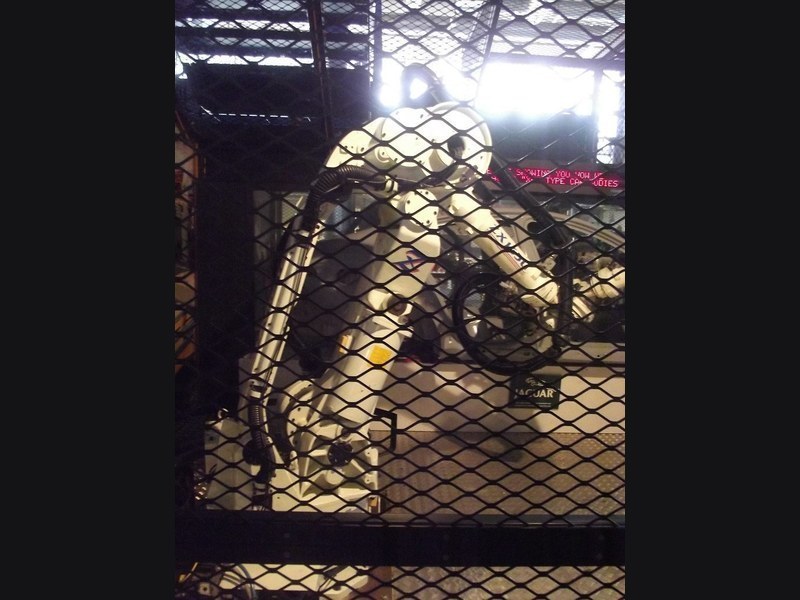
Notice the word "fencing." A cobot with a sharp gripper holding a metal part is not inherently safe — the risk assessment still applies to the whole cell, not the arm alone. Plenty of cobot cells end up fenced anyway, at which point you've paid a premium for safety features you're not using.
Where cobots genuinely win
- Machine tending — loading a CNC or press where a human is nearby anyway, and the task is repetitive but low-speed.
- High-mix, low-volume work — redeploying the arm to a new task in a day rather than a week.
- Tight floor space — no fence means a much smaller cell footprint.
- First automation — the teach pendant really is easier for non-engineers, and that matters when nobody on staff has programmed a robot before.
Where the industrial arm still rules
- Throughput. A 6-axis arm at full speed routinely beats a cobot 2–3× on the same motion. If your takt time is aggressive, this is not close.
- Payload and reach. Need 20 kg or 2 m reach? Industrial arms scale far beyond the typical cobot envelope, and more cheaply per kilogram.
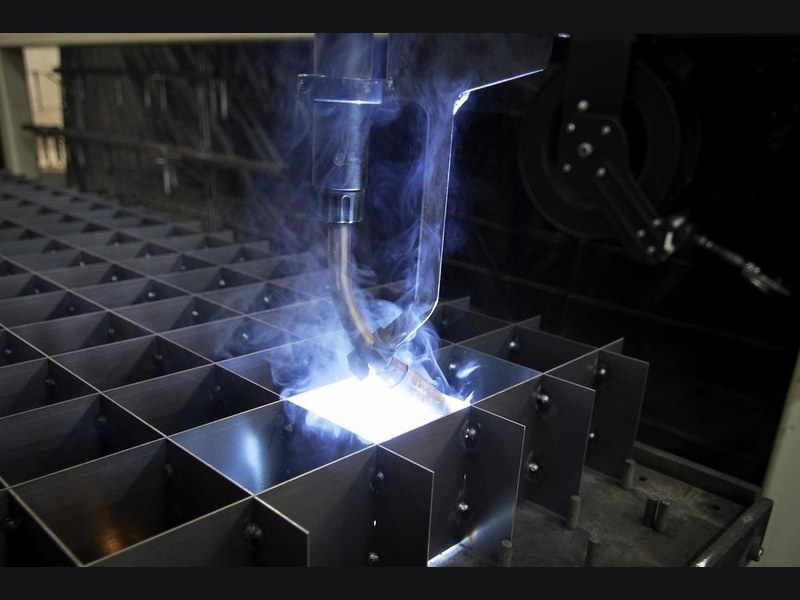
- Harsh environments. Welding, casting, grinding — foundry-grade industrial arms are built for abuse in ways cobots simply aren't.
The payback math people skip
The robot itself is rarely the whole bill. For a realistic payback model, count these:
- End-effector and tooling (often 15–30% of the arm's price).
- Cell integration — guarding, conveyors, sensors, safety PLC.
- Commissioning and programming time.
- Spare parts and annual maintenance.
As a rough rule of thumb for a simple pick-and-place or tending cell, total installed cost runs 1.8–2.5× the bare robot price. Against that, put a realistic number for one operator's fully-loaded annual cost in your market — not the wage alone, but with shifts, turnover and the scrap rate the robot eliminates. In many of the markets we serve, a two-shift cell pays back inside 18 months; a single-shift cell often takes three-plus years and deserves a harder look.
Our honest advice: buy the boring robot for the boring job. If the task is high-speed, heavy or fenced anyway, an industrial arm is cheaper to buy and cheaper to run. Save the cobot for jobs that genuinely need to share space with people.
One last thing: integration beats brand
The biggest determinant of whether an automation project succeeds isn't the robot brand — it's whether somebody in the building can reprogram it when the product changes next year. When we quote robot cells, we spend as much time on training and documentation as on hardware, because that's where the projects that fail actually fail.