
Every month someone sends us a spec sheet and asks, "is this machine good?" The honest answer is that a spec sheet alone can never tell you. But it can tell you where to start asking questions — and the wrong questions are what cost importers real money.
So here's the checklist we run through with buyers, in the order that actually matters.
Start with the part, not the machine
Before you look at any catalog, write down three numbers: your largest part envelope (X × Y × Z), your typical tolerance band, and your material mix. A shop cutting mostly aluminum at ±0.05 mm needs a completely different machine from one doing steel molds at ±0.01 mm. Most regret-purchases we hear about start with a buyer choosing the machine first and forcing parts onto it later.
For travels, leave margin. If your biggest part needs 600 mm of X, buy 800. You will get the next job next year, and it will need 750.
The spindle: two numbers, one trap
Brochures love rpm. But rpm without torque is a marketing number. A 12,000 rpm spindle that only delivers its rated torque above 8,000 rpm will feel weak the moment you touch steel. Ask for the torque curve, not the headline figure. For general steel and aluminum work, a 10,000–12,000 rpm direct-coupled spindle with a belt option covers most shops; heavy roughing wants a geared head and lower rpm with more Nm at the bottom of the curve.
Rigidity beats speed, every time
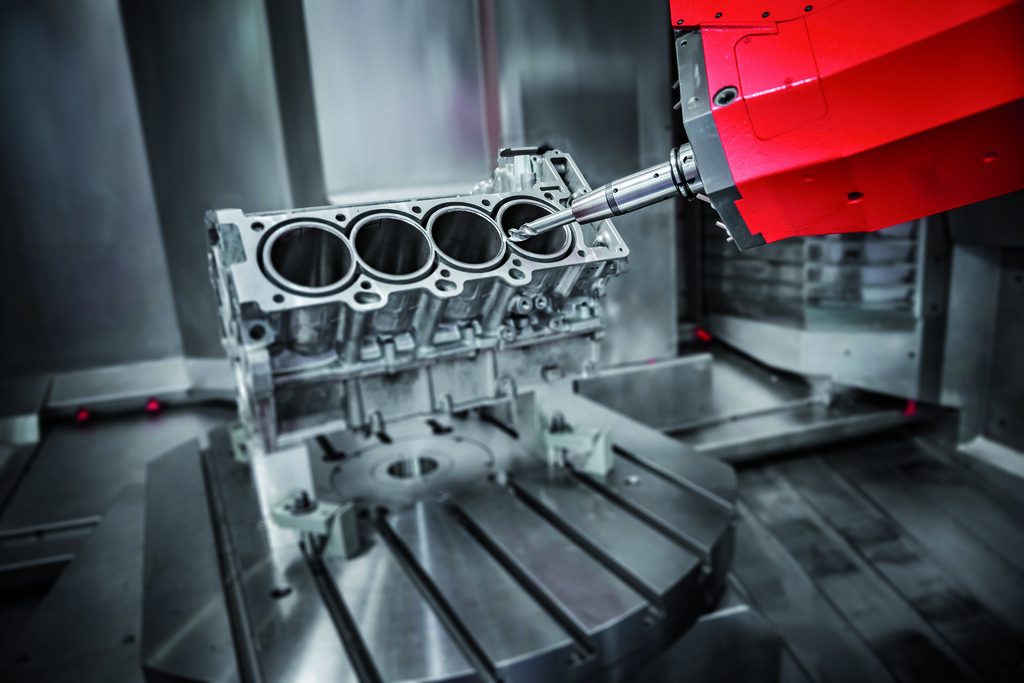
Here's the trap: two machines with identical travel and spindle specs can differ by 30% in price, and the difference is almost always in the castings and guideways. Cast iron quality, rib design, box-way vs. linear rail — these decide whether you can actually take a 5 mm depth of cut without chatter, and whether accuracy holds in year six.
Quick test: ask the supplier for the machine weight. A VMC850-class machine under roughly 4,500 kg is usually cutting corners somewhere in the casting. Weight isn't everything, but it's a remarkably reliable smell test.
Linear rails give you higher rapid traverse and are the right choice for high-speed aluminum work and 3D surface finishing. Box ways (hard rails) damp vibration better and handle interrupted cuts — they belong in any shop doing steel roughing. Some suppliers now offer hybrid configurations; they're worth a conversation if your mix is genuinely split.
The tool changer is a productivity story
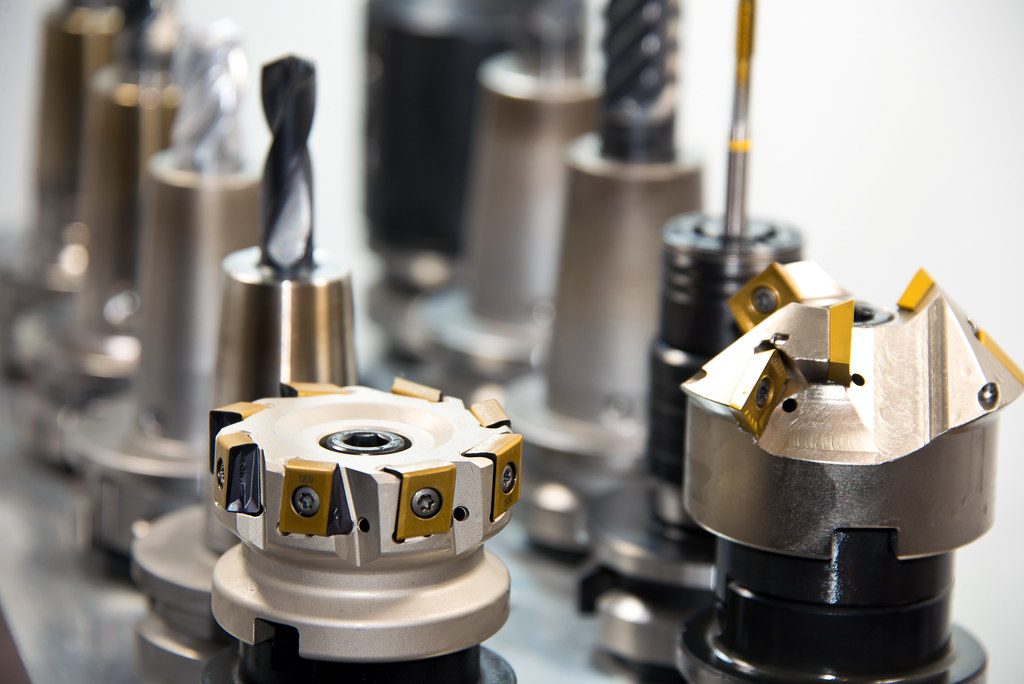
If your jobs run 30+ tools, the ATC spec moves from a line item to a bottleneck. Arm-type (cam-driven) changers at 1.5–3 seconds tool-to-tool are the standard for serious work. Flying-arm changers are cheaper and slower — fine for simple 2.5D parts, painful in complex mold work. Also ask about max tool weight and the tool-to-tool interference limit; nothing is more annoying than discovering your long drill doesn't fit the neighbor's pocket.
Controller: don't overthink it, but don't ignore service
Fanuc, Mitsubishi, Siemens, and the better domestic systems are all competent. The real question is who services it in your country. A controller with no local technician turns a $200 board failure into three weeks of downtime. If your market has strong Fanuc service coverage, that alone is a good reason to choose it — boring, but correct.
The questions nobody asks (but should)
- Power and air: the machine spec says 25 kVA — does your shop's transformer have it? We've shipped machines that sat idle for a month waiting on an electrician.
- Foundation and leveling: ask for the foundation drawing before the machine ships, not after it lands.
- Spare parts list: order the wear parts (spare spindle bearings are a long lead-time item) with the machine, not when you need them.
- Acceptance test: insist on a cutting test with your material and your tolerance on the acceptance protocol. A laser interferometer report is nice; a good chip is better.
What we actually recommend
For a first VMC — general job-shop work, aluminum and mild steel, ±0.02–0.05 mm — a VMC850 or VMC1060 with a 10,000–12,000 rpm direct spindle, linear rails, arm-type ATC and a well-serviced controller lands between $28,000 and $55,000 FOB depending on configuration and origin. That's the price band where you should be comparing at least three quotes, and where spec-sheet literacy pays for itself many times over.
If you're buying above that band, or below it, the conversation changes — and it's worth having it with someone who ships these machines regularly.