
We quote a lot of welding cells. Some turn into smooth projects that pay back in fourteen months. Others stall at the engineering stage because something basic was overlooked before the quote even landed. The difference rarely comes down to the robot brand. It almost always comes down to whether the buyer did their homework on the parts, the process and the people who will run the cell day to day. This post is the checklist we wish every prospect had filled out before asking "how much?"
Part consistency is non-negotiable
A robot repeats the same motion to within a fraction of a millimeter. Your parts need to show up to the fixture with the same discipline. If incoming blanks vary by ±2 mm in joint location, the robot will either miss the seam or deposit weld metal in the wrong place. No amount of seam tracking can reliably fix bad part fit-up at production speed.
Before automating, measure thirty consecutive pieces from your upstream process. Record gap width, edge alignment and surface condition at the weld joint. If variation exceeds 0.5 mm on thin sheet or 1 mm on structural steel, fix the cutting, bending or forming step first. We have turned down welding cell orders where the root cause was a worn press brake die — spending USD 90,000 on automation to compensate for a USD 800 tooling problem makes no sense.
Define what "weld quality" means in writing
"Good welds" is not a specification. Which standard applies — ISO 5817 level B, AWS D1.1, EN 1090 EXC2? Is porosity acceptable if ground smooth afterward, or must it be absent as-welded? What is the maximum allowable undercut? Does the customer require visual inspection only, or dye penetrant / ultrasonic on a sample rate?
Write these requirements down and attach them to the RFQ. They drive torch selection, wire diameter, shielding gas mix, travel speed limits and whether the cell needs a secondary inspection station. A cell built for cosmetic fillet welds on furniture frames costs 20–30% less than one qualified for structural steel under EN 1090 EXC3, and confusing the two leads to rework or failed audits later.
Rule of thumb: if your buyer hasn't named a welding standard, ask them to before you price anything. "We just want it strong enough" usually means they haven't decided what acceptance criteria apply, which means you'll inherit the argument after delivery.
Cycle time math: use real numbers, not catalog peaks
Vendor brochures list maximum travel speeds and deposition rates. Neither reflects your actual cycle. Real-world arc-on time for MIG welding typically runs 60–75% of total cycle; the rest is positioning, clamping, nozzle cleaning and repositioning. For TIG, arc-on can drop below 40% on complex joints.
| Factor | Typical range | Impact on cycle |
|---|---|---|
| Arc-on efficiency (MIG) | 60–75% | Baseline for throughput estimates |
| Arc-on efficiency (TIG) | 30–45% | Much slower; verify before promising output |
| Torch cleaning interval | Every 3–8 arcs | Adds 3–6 seconds per clean cycle |
| Fixture load/unload | 15–45 seconds | Often longer than the weld itself |
| Seam tracking correction | 0–4 seconds per seam | Adds up on multi-pass joints |
Ask the integrator for a cycle-time simulation based on your specific part geometry and weld sequence, not a generic estimate. Then add 15–20% contingency for commissioning reality. Cells that look profitable at catalog speed often break even at best once real arc-on percentages are applied.
Fixture design deserves its own budget line
The fixture holds the part in position, absorbs heat distortion and presents the joint to the torch at the right angle. Bad fixtures cause missed seams, inconsistent penetration and operator frustration. Good fixtures cost money — typically 15–25% of the total cell price — but they determine whether the cell actually runs.
Specify pneumatic or hydraulic clamping over manual wherever cycle time matters. Manual clamps add 20–40 seconds per load and introduce operator-to-operator variation. Also confirm that the fixture accommodates thermal expansion during welding; steel grows when hot, and a rigid clamp that works cold may distort the part or jam mid-cycle.
Operator skill: plan for training, not expertise
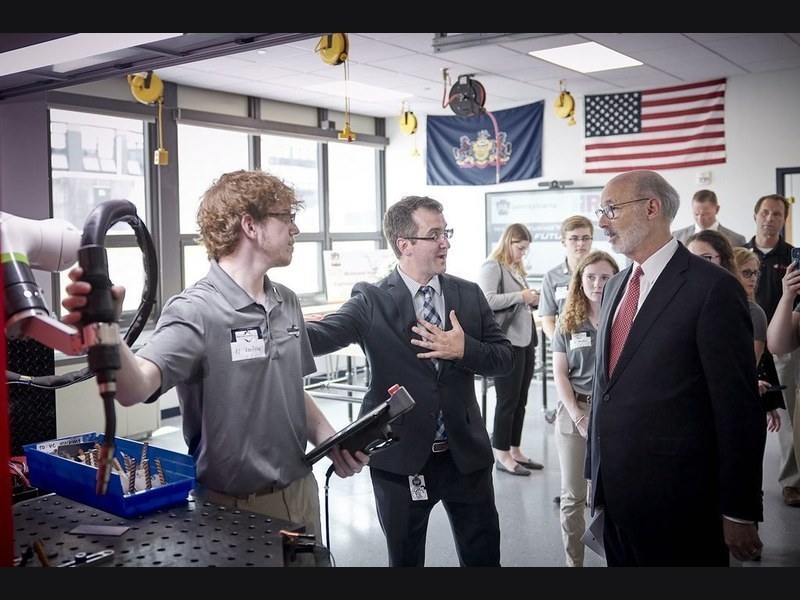
A welding cell does not eliminate the need for skilled people. It shifts the skill requirement from hand-eye coordination to programming, troubleshooting and maintenance. The operator who used to weld manually now needs to adjust parameters when wire spools change, clear nozzle jams, recognize defective welds by sound or appearance, and perform basic preventive maintenance.
Budget 40–80 hours of on-site training for at least two operators and one maintenance technician. Include offline programming instruction so new parts can be programmed without stopping production. Without this investment, expect the cell to run at 50–60% of rated capacity for the first three to six months while staff climb the learning curve.
Honest caveat: if nobody in the shop has ever touched a robot and there's no local integrator support within a reasonable drive, start smaller. A single-station MIG cell with offline programming is manageable to learn; a dual-station laser-hybrid line with vision tracking is not a first project. Walk before running.
Total cost of ownership, not just the invoice
The robot and controller are maybe 40–50% of first-year spend. Add in:
- Fixtures and tooling: 15–25% of cell cost, sometimes more for complex parts.
- Safety equipment: fencing, light curtains, fume extraction, interlocks. CE-marked installations in Europe run USD 8,000–20,000 for safety hardware alone.
- Consumables startup: contact tips, nozzles, liners, wire, gas. First-month burn-in eats through consumables faster than steady-state operation.
- Training and commissioning: 5–15 days on site depending on complexity, plus travel and accommodation for the integrator's team.
- Spare parts package: spare servo motors, teach pendant, backup controller. Downtime waiting for a replacement part from overseas costs far more than stocking it upfront.
A complete MIG welding cell for structural steel typically lands between USD 85,000 and 160,000 installed depending on size, safety requirements and market. TIG cells run higher due to slower deposition and tighter tolerances. Laser welding cells start around USD 180,000 and go up fast. Get a detailed breakdown before comparing vendors; lump-sum quotes hide where the margins really sit.
What to send us for an honest assessment
We'll tell you whether welding automation fits your situation — and if it doesn't, we'll say so plainly. To give you a real answer rather than a catalog price, send:
- Sample part drawings or photos with joint locations marked.
- Material type, thickness range and current manual weld procedure (wire, gas, amperage).
- Target output (parts per shift or per hour) and number of shifts planned.
- Applicable welding standard and customer acceptance criteria.
- Floor space available and utility connections (power rating, compressed air, gas supply).
- Destination country (for certification, electrical standards and import documentation).
We'll come back with a feasibility note, a budget range and a list of open questions — not a glossy brochure. If your parts aren't consistent enough yet, we'll point you at the upstream fix first and revisit automation when the foundation is solid. That's how we keep customers coming back instead of calling us back with problems.